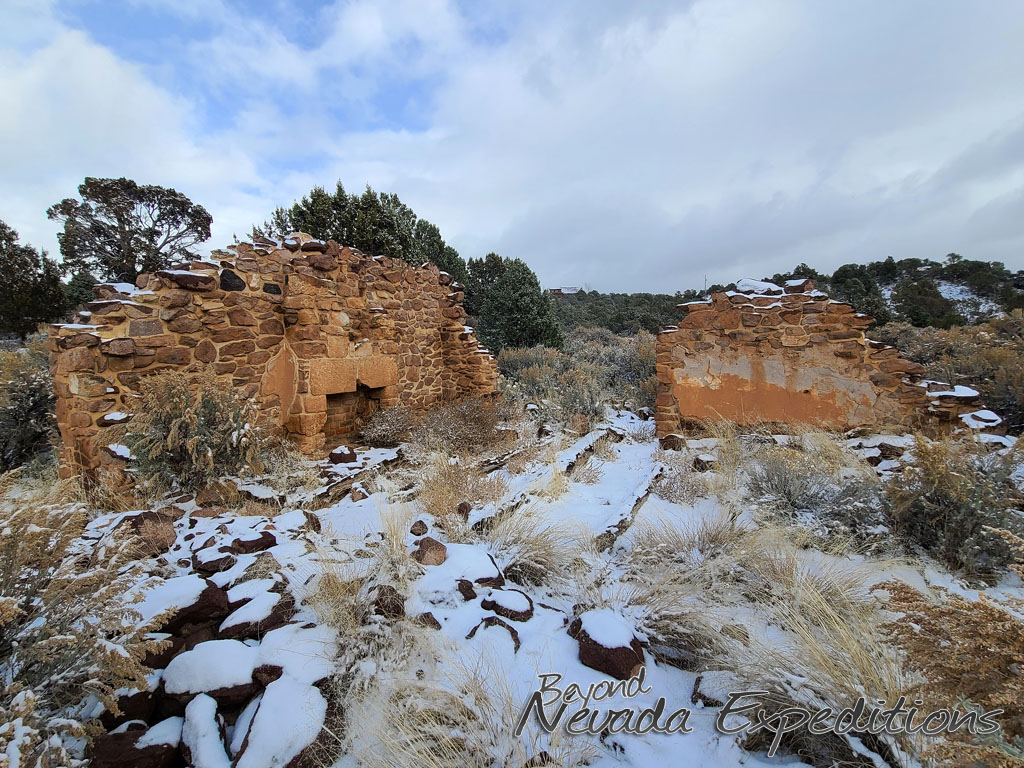
Old Irontown
(Iron City)
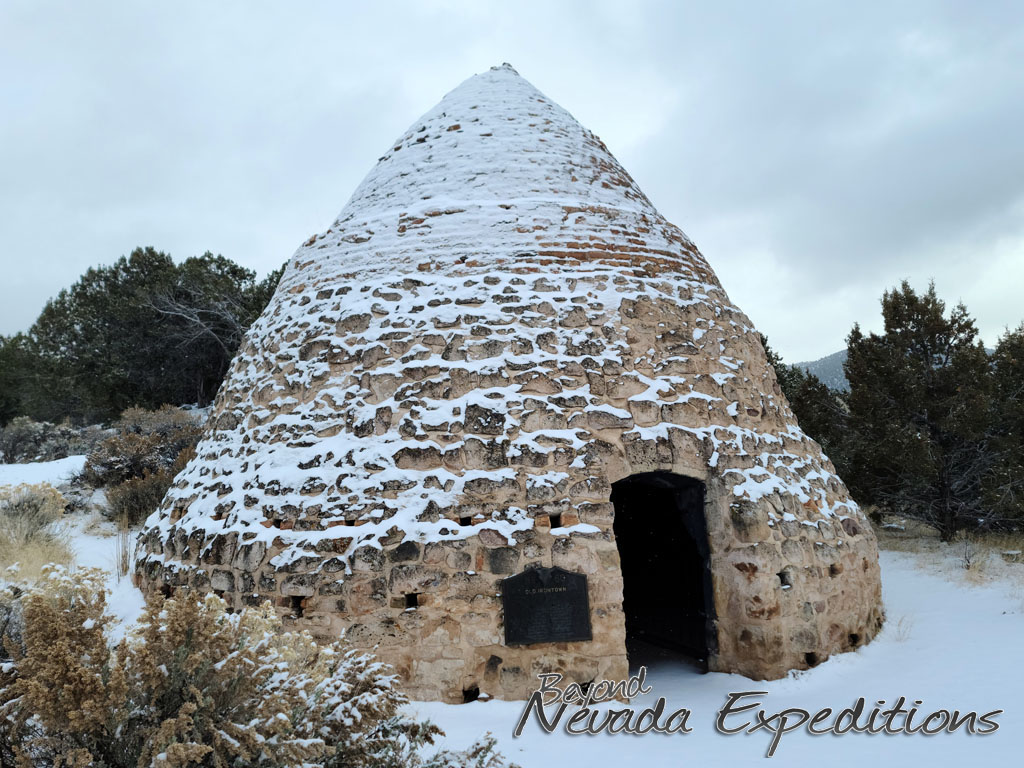
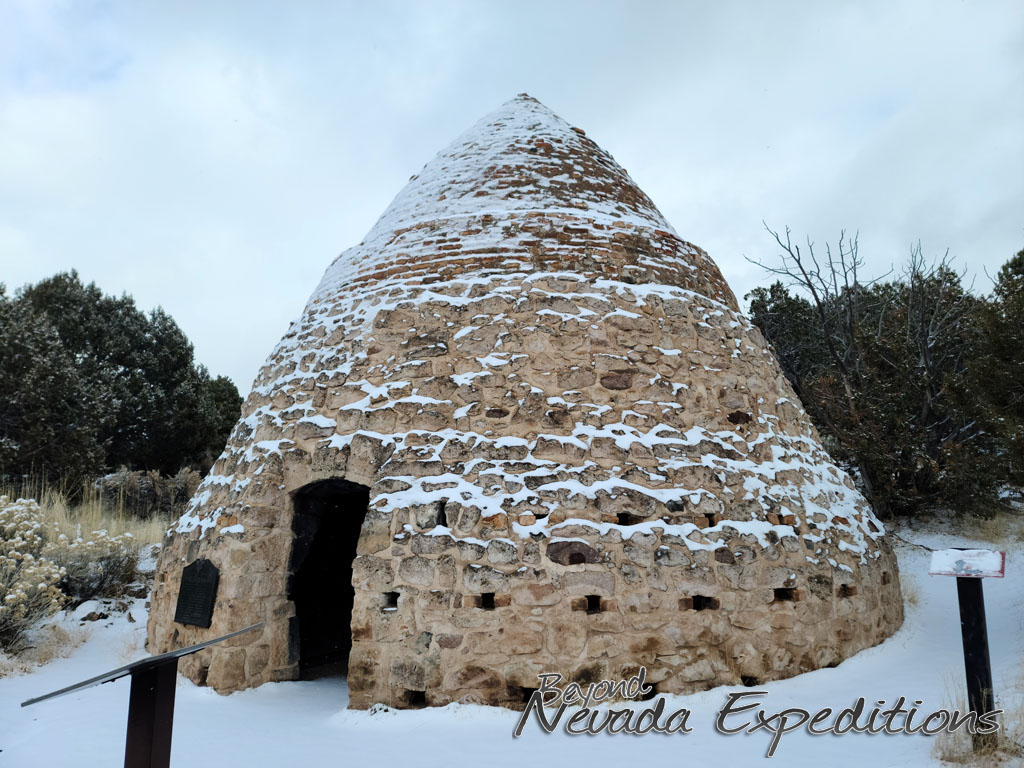
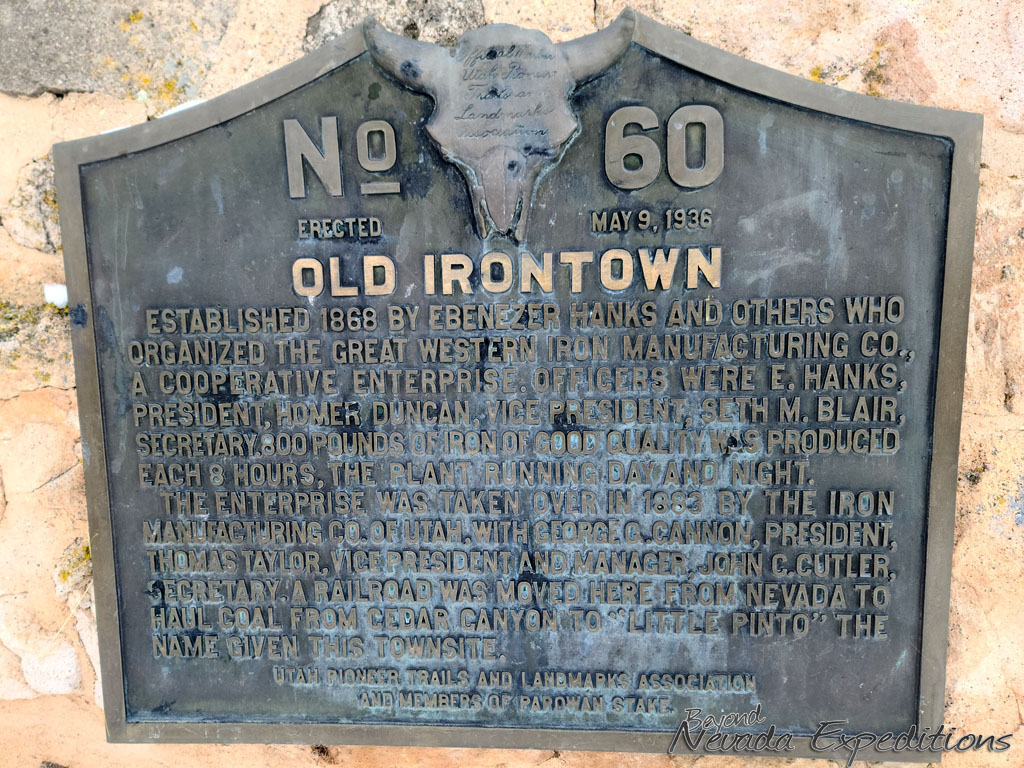
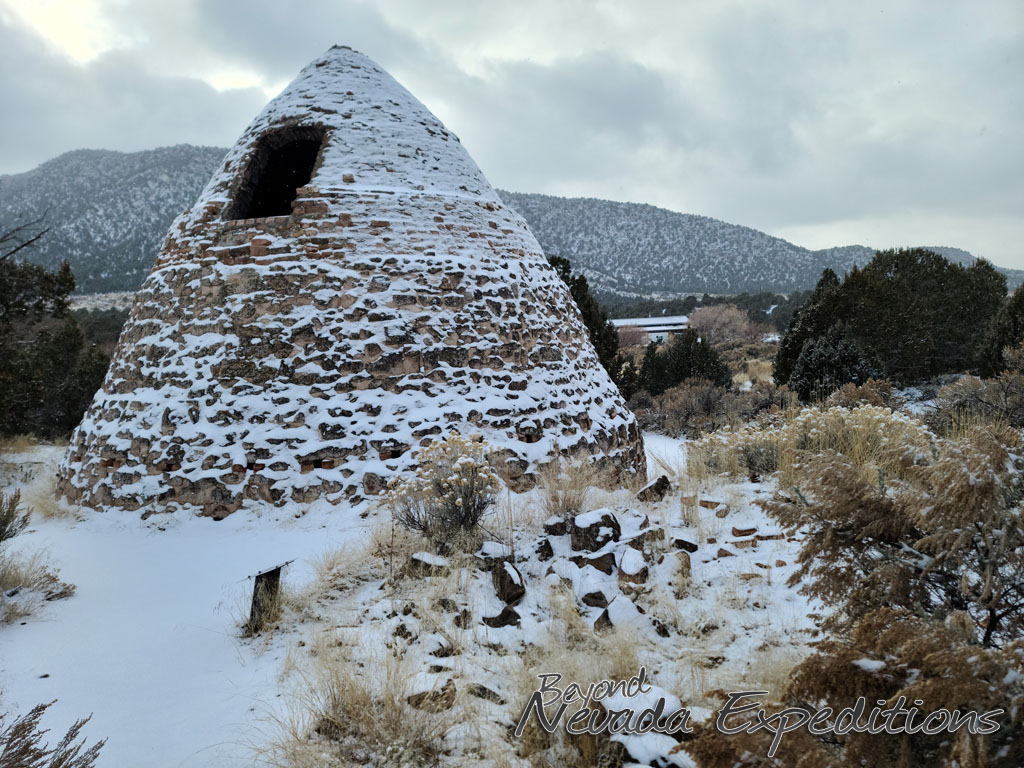
The "Iron Mission" in Utah began in 1849, with the ill-fated Pioneer Iron and Deseret Iron Companies near Cedar City. Flood, poor yields, and other hardships ended the operation by the end of the 1850s, but a demand for iron ore persisted. Iron deposits found about 20 miles west of Cedar City led to the establishment of the new Union Iron Works (Pres. Ebenezer Hanks) on Little Pinto Creek in June 1868. By 1870, the iron works had a furnace, pattern shop, two charcoal ovens, and a daily capacity of 2500 points. An arrastra was also built to grind fine sand for the pattern molds. Stoves, irons, and milling equipment were cast onsite and sold to miners throughout Nevada and Utah. The new "Iron City" had a population just shy of 100, with a post office, brick school, boarding house, butcher shop, and store.
In 1873, the Company was reorganized as the Great Western Iron and Manufacturing Company, and the facilites were enlarged. Production topped out at five to seven tons of pig iron per day, and Iron City's population peaked at a few hundred. In addition to everyday items and mining equipment, the most notable items produced were the twelve life-sized cast iron oxen that support the baptismal font in the St. George Temple. Unfortunately, the Great Western Company couldn't make a profit selling small items and not being able to afford shipping costs for larger orders led to the iron works closure in 1876. Efforts to preserve the site began in 1948, and in 1971 the old iron works ruins - today known as "Old Irontown" - were listed on the National Register of Historic Places.