Fort Pearce
From 1865 until 1868, settlers were engaged in conflicts with Ute and Navajo natives in what was called the "Black Hawk War", named for Ute chief Antonga Black Hawk. Construction began on Fort Pearce, named for Captain John D.L. Pearce, on December 4, 1866. The location chosen was on a bluff overlooking a wide wash (known now as the Fort Pearce Wash) which provided the Navajo access to the Mormon settlements. The fort, with two rooms, originally had walls eight feet high with gunports, and no roof. A large corral was added below on the wash in 1869.
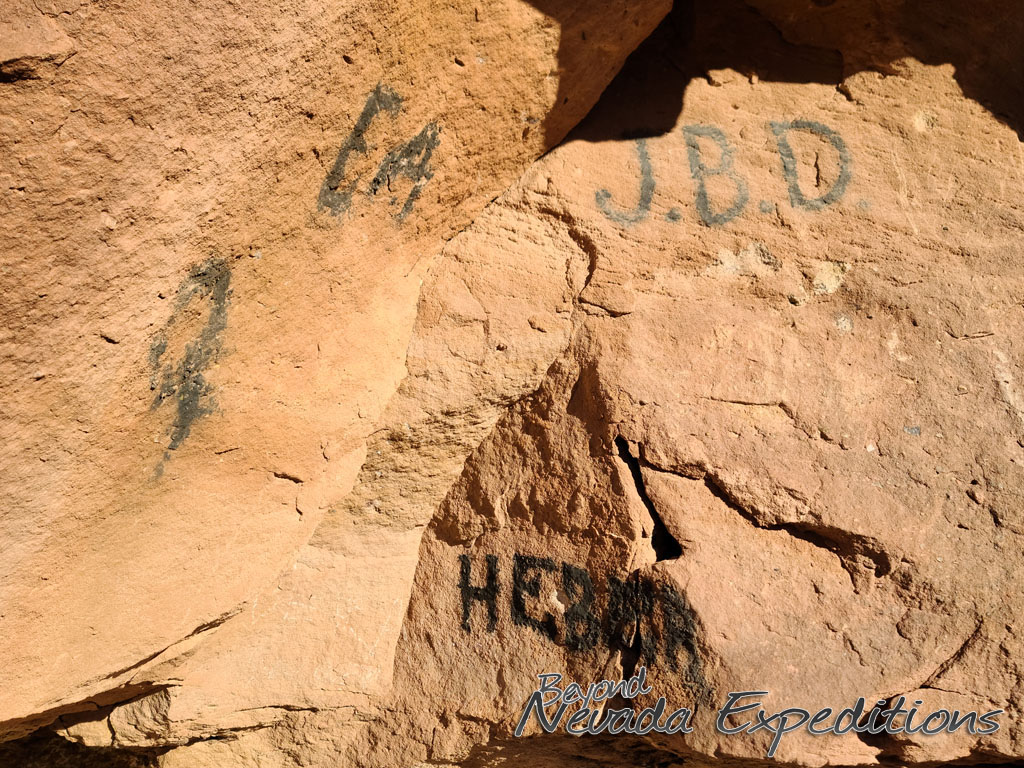
Fort Pearce never saw a battle before its service ended in 1873. Thereafter, it was only used as a watering stop for travelers and livestock along the Temple - and later Honeymoon - Trail to St. George. About 200 yards below the fort ruins, several names can be found either engraved in the rock or written with wagon axle grease.