Shivwits
During the second half of the 19th century, Mormon settlers arrived in the Utah and New Mexico (Arizona) Territories and settled on lands traditionally used by the Shivwits Band of Paiutes. Along with losing access to their food and water sources, the Shivwits were exposed to unfamiliar diseases, and their population was devastated. As many as 160 were baptized by the Mormons, while others struggled to survive in the arid landscape. By the late 1880s, rancher Anthony W. Ivins petitioned the Federal Government to relocate the Shivwits to a new home on the Santa Clara River. In 1891 the "Shebit tribe of Indians in Washington County, Utah" was federally recognized and the first Paiute reservation established (though it wasn't recognized until 1903) with Ivins serving as Special Indian Agent for its first two years. Unfortunately, the new reservation did not include water rights, so the Shivwits were forced to abandon farming. Nevertheless, the population that year was recorded at 194.
In 1916, President Woodrow Wilson issued an order expanding the Shivwits Reservation to nearly 27,000 acres. Unfortunately, the land still lacked many resources so the Shivwits were forced to rely on the government. By 1933, discussions were underway for the construction of the new Shem Dam on the Reservation, and upon its completion a new irrigation diversion was created for tribal land downstream. Two years later, the Shivwits Band accepted the Wheeler-Howard Act (Indian Reorganization Act), which provided for tribal self-governance and protection of land rights. Another land expansion in 1937 brought the Reservation to its current size of 28,480 acres.
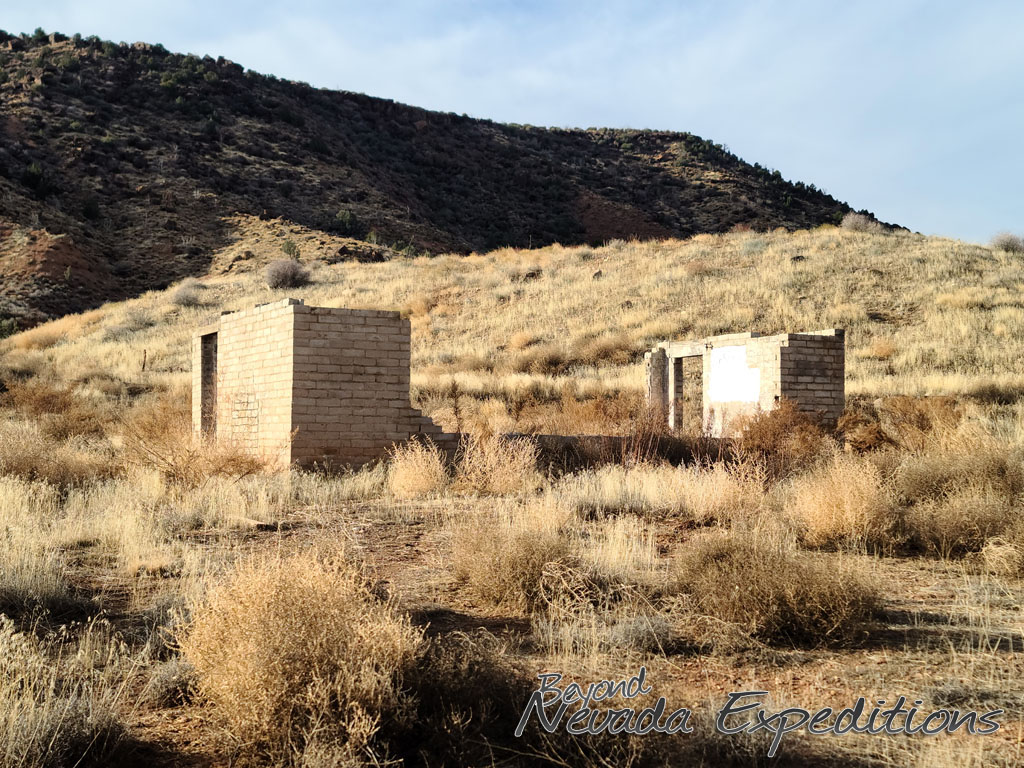
By the 1950s, the movement of "Indian termination" or assimilation was gaining traction. Championed by Utah Senator Arthur Watkins, Public Law 762 stripped the Shivwits Band of its federal recognition and eligibility for support on September 1, 1954. As a result, half of all tribal members were lost during the next 26 years due to a lack of resources which included health care. It wasn't until April 3, 1980 that the Paiute Indian Tribe of Utah Restoration Act (Public Law 96-227) under President Jimmy Carter reinstated federal recognition for the Shivwits Band. The Shivwits Band of Paiutes is today part of the larger Paiute Indian Tribe of Utah. Newer homes make up the modern village of Shivwits on the Santa Clara Bench, while ruins along the Santa Clara River mark the former reservation community. Please remember that all remnants of the former community are on private property within the Shivwits Reservation; stay on the road and don't trespass.