Julian
Not long after Fred Coleman's discovery of gold in 1869, four cousins (Drury & James Bailey and Mike & Webb Julian) arrived and homesteaded in the Cuyamaca Mountains a few miles upstream from the new town of Emily City. In February 1870, Drury Bailey found a gold-containing quartz ledge which he dubbed the 'Warrior's Rest', and a few days later on February 22 H.C. Bickers discovered what he called the 'George Washington' as it was that president's birthday. A new rush began, and Drury Bailey laid out a new townsite which he called 'Julian', after his cousin Mike whom he claimed was the best looking man in town, and that it was a better sounding name than 'Bailey'. By March, twenty new claims were filed, and other small towns also emerged nearby following additional finds; these included Stonewall, Banner, Branson City, and Eastwood.
Due to the success of the mines, the owners of the Rancho Cuyamaca land grant attempted to gain control of the mines and collect royalties by claiming that the mines were in fact located within the Rancho's boundaries. After an intermittent legal battle, it was determined in 1873 that the mines did not fall within the boundaries, and the matter was closed when President Ulysses S. Grant approved the official boundaries on December 19, 1874.
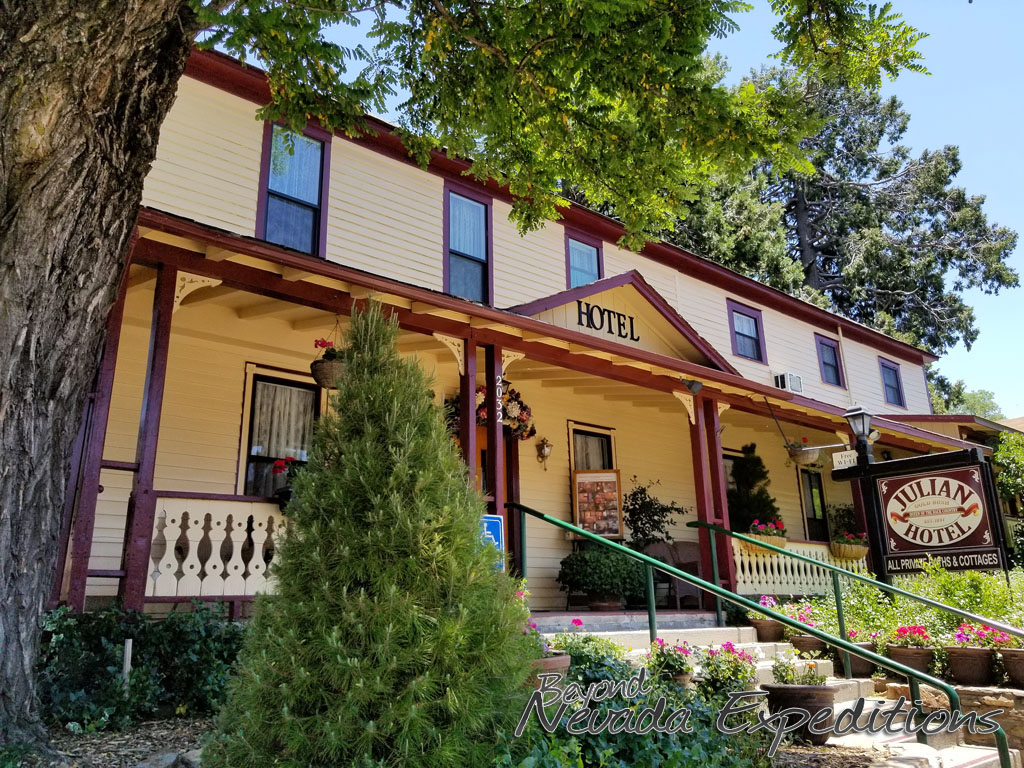
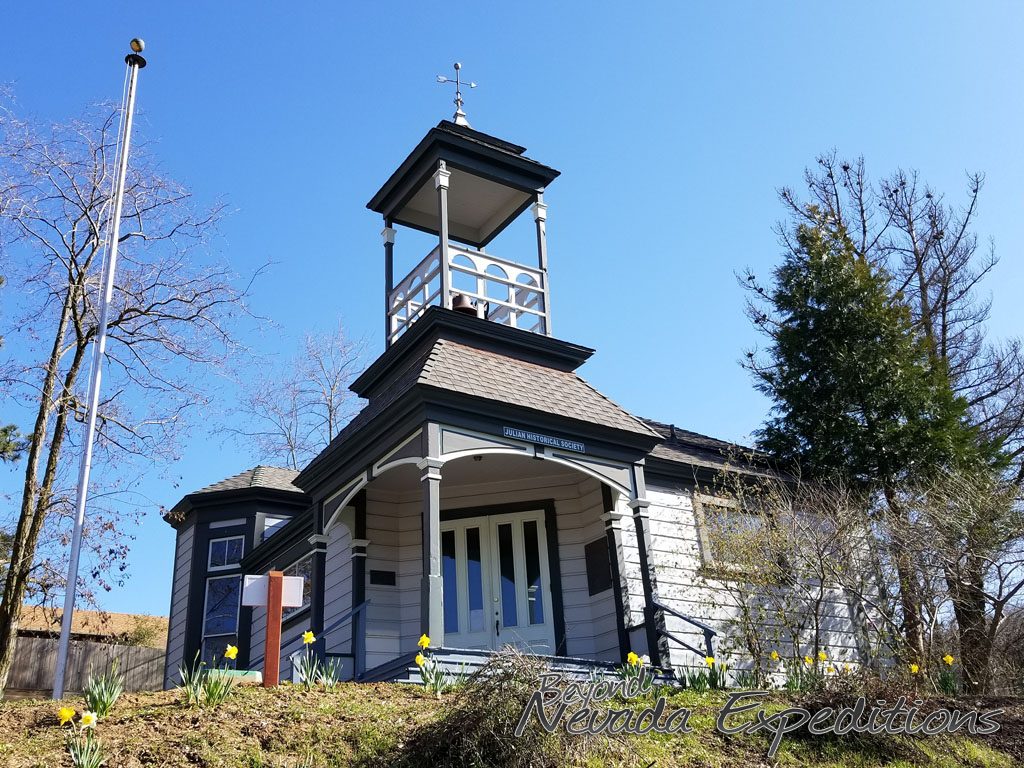
Julian continued to thrive through the 1870s and up to 1880, with a school, two hotels, five stores, two cafes, two blacksmith shops, two livery stables, a bank, several saloons, and a population of around 600. Of particular note is the number of black people - many former slaves - who lived and worked in Julian at the time; during the 1880 census, 33 of the 55 black residents of San Diego County were in Julian, and some owned such successful businesses as the Hotel Robinson (which still stands).
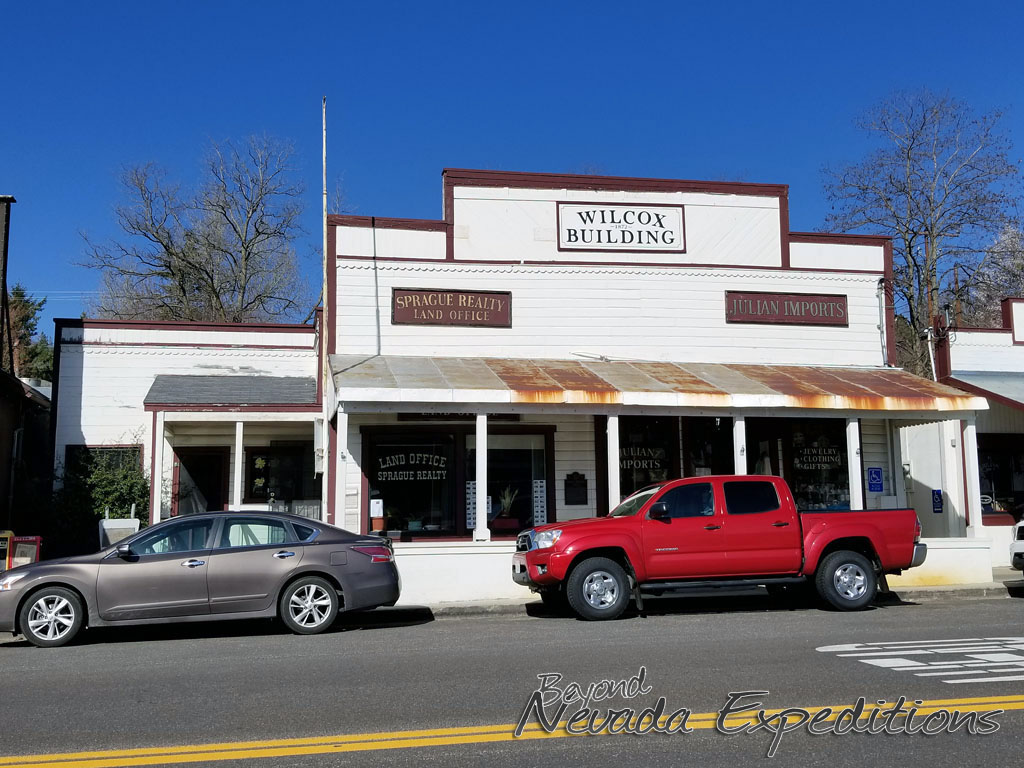
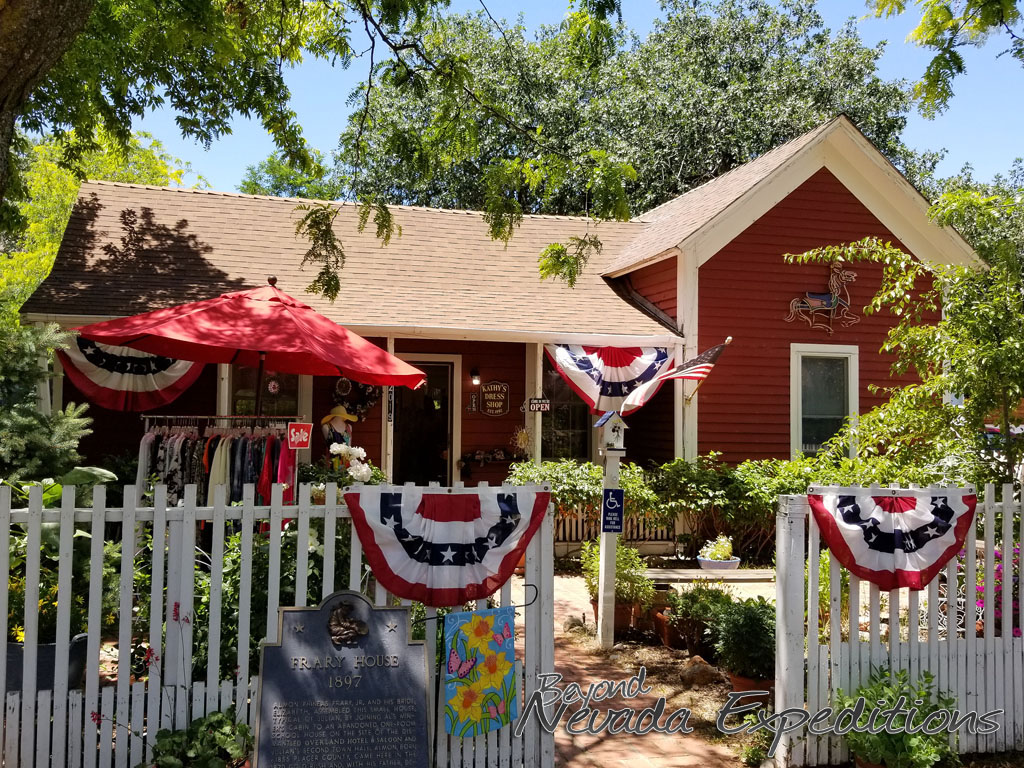
After 1880, word of new discoveries in Nevada and Arizona drew miners away and Julian's population dwindled to about 100. New finds in 1888 brought new life, but Julian's economy soon shifted from mining to agriculture. James Madison and Thomas Brady had earlier planted the first apple trees in Julian, and by the 1890s several large orchards had been planted of not only apples, but also peaches and pears. In 1907, apples from Julian won eight gold medals at the Jamestown Virginia Exposition. The first 'Apple Day' was held in 1909 to celebrate the harvest, and even today after over a century of production Julian is known for its apples. Many original buildings from the mining days line the charming Main Street, and an abundance of apple pies, jellies, preserves, and ciders can be found at a wide number of small local businesses, making Julian well worth the trip.